
Literacy for All Students
A Citywide Initiative to Build Better Readers in Kansas City, Missouri
Series Overview
The United States faces a literacy crisis, and Kansas City, Missouri, is no exception. Seventy-seven percent of Kansas City’s third graders are not proficient in English language arts, and at least 290,000 adults in the Greater Kansas City region struggle with basic literacy skills. This challenge disproportionately impacts students from low-income families and students of color, reflecting not just an achievement gap but also an opportunity and access gap that restricts students’ future success.
Kansas City needed a coordinated and sustained approach to address this crisis. In 2024, SchoolSmart Kansas City (SchoolSmartKC) — a nonprofit dedicated to accelerating student growth and proficiency for Kansas City students — took the lead in developing Literacy for All Students (LFAS). This citywide initiative blends the coherence of a proven literacy model from Mississippi with the strength of Kansas City’s local leadership and cross-sector collaboration.
This series includes a summary report and three separate case studies focused on a different aspect of the initiative, including its origins and design philosophy, collaboration structure, and lessons learned during rollout. Together, the case studies provide a comprehensive view of how Kansas City stakeholders are working together to improve literacy outcomes. The series also offers insights for practitioners, funders, and policymakers seeking to understand and replicate evidence-based, locally driven approaches to literacy improvement.
Download and read the Literacy for All Students summary report and access the accompanying case studies.

Explore the Case Studies
The LFAS series documents the design, development, and initial implementation of the citywide literacy initiative led by SchoolSmartKC. Readers can explore each case study individually to examine a specific aspect of LFAS, or review the full set to understand how design, partnerships, and implementation interconnect to form a cohesive, citywide approach to improving literacy:
- Design: Outlines the LFAS model’s design and core components, grounded in evidence-based instructional practices, collaboration, and adaptability to support continuous improvement and local relevance.
- Partnerships: Describes how SchoolSmartKC collaborated with educators, funders, community organizations, and families to co-create the LFAS model.
- Implementation: Examines how the LFAS model’s design translated into practice, highlighting key levers, early outcomes, and lessons learned.
Design
Partnerships

Implementation

Acknowledgments, About the Authors, About Bellwether
Acknowledgments
We would like to thank the many experts who gave their time and shared their knowledge with us to inform our work. Thank you also to SchoolSmartKC for its financial support of this project.
We would also like to thank our Bellwether colleagues Brian Robinson for his input and Alexis Richardson for her support. Thank you to Amy Ribock, Kate Stein, Andy Jacob, McKenzie Maxson, Temim Fruchter, Julie Nguyen, and Amber Walker for shepherding and disseminating this work, and to Super Copy Editors.
The contributions of these individuals and entities significantly enhanced our work; however, any errors in fact or analysis remain the responsibility of the authors.
About the Authors

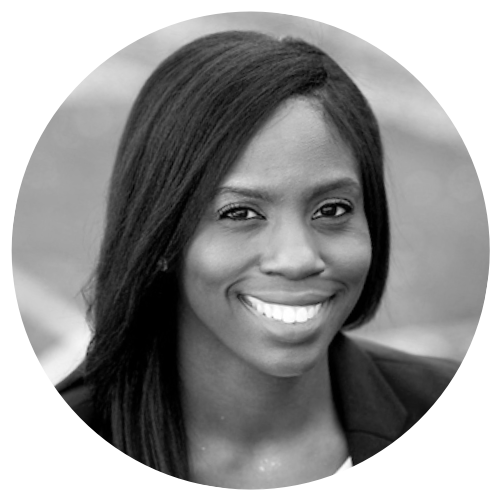
LYNNE WELLS GRAZIANO
Lynne Wells Graziano is a senior analyst at Bellwether. She can be reached at lynne.graziano@bellwether.org.
JESSICA SLATON
Jessica Slaton is an associate partner at Bellwether. She can be reached a jessica.slaton@bellwether.org.

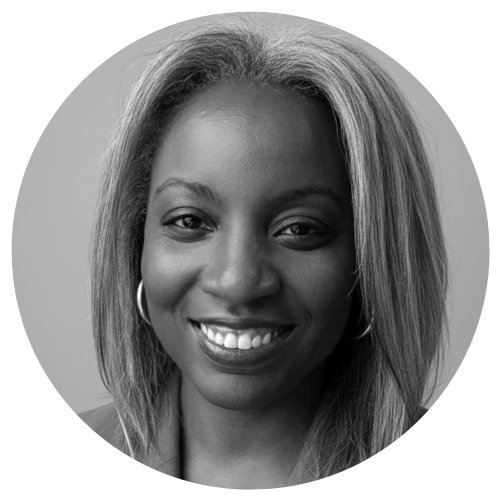
DANIELA TORRE GIBNEY
Daniela Torre Gibney is a senior associate partner at Bellwether. She can be reached at daniela.torregibney@bellwether.org.
TITILAYO TINUBU ALI
Titilayo Tinubu Ali is a partner at Bellwether and leads the organization’s work on early childhood education. She can be reached at titilayo.ali@bellwether.org.
Bellwether is a national nonprofit that works to transform education to ensure young people — especially those furthest from opportunity — achieve outcomes that lead to fulfilling lives and flourishing communities. Founded in 2010, we help mission-driven partners accelerate their impact, inform and influence policy and program design, and bring leaders together to drive change on education’s most pressing challenges. For more, visit bellwether.org.
© 2026 Bellwether
This report carries a Creative Commons license, which permits noncommercial reuse of content when proper attribution is provided. This means you are free to copy, display, and distribute this work, or include content from this report in derivative works, under the following conditions:
Attribution. You must clearly attribute the work to Bellwether and provide a link back to the publication at www.bellwether.org.
Noncommercial. You may not use this work for commercial purposes without explicit prior permission from Bellwether.
Share Alike. If you alter, transform, or build upon this work, you may distribute the resulting work only under a license identical to this one.
For the full legal code of this Creative Commons license, please visit www.creativecommons.org. If you have any questions about citing or reusing Bellwether content, please contact us.
